Science Teaching Alive
Science Teaching Alive
Low cost science tips for resourceful science teachers
"The ideas in these videos are drawn from a long history in science education, mostly through work with science teachers at schools in very disadvantaged situations."

How to teach Hydrogen Bonding

How to improvise acid - base indicators

How to teach convex lenses

How to teach electromagnetic induction and Faraday's Law

How to teach electrical concepts and circuits

Principles of science teaching - active learning

How to teach Sound and Pitch

How to teach the reflection of light

How to teach the electric motor effect

How to teach the table of standard reduction potentials

How to teach the Alkanes

How to get magnets out of old speakers
About Brian Gray and these films
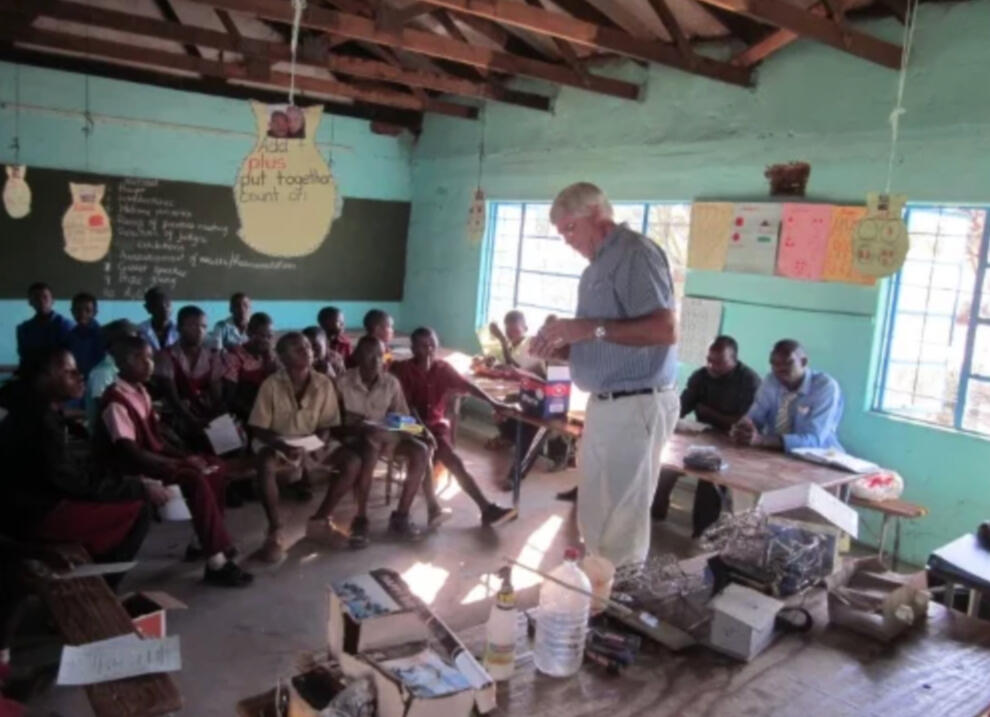
Brian Gray was an educator, a people person, an African and an optimist. He was passionate about science education, especially in disadvantaged areas in rural Southern Africa.In February 2013 Brian started to produce short videos of some of his innovative ideas for teaching science concepts. He hoped to inspire teachers to make lessons more practical, relevant and exciting while promoting the development of students’ science process skills.
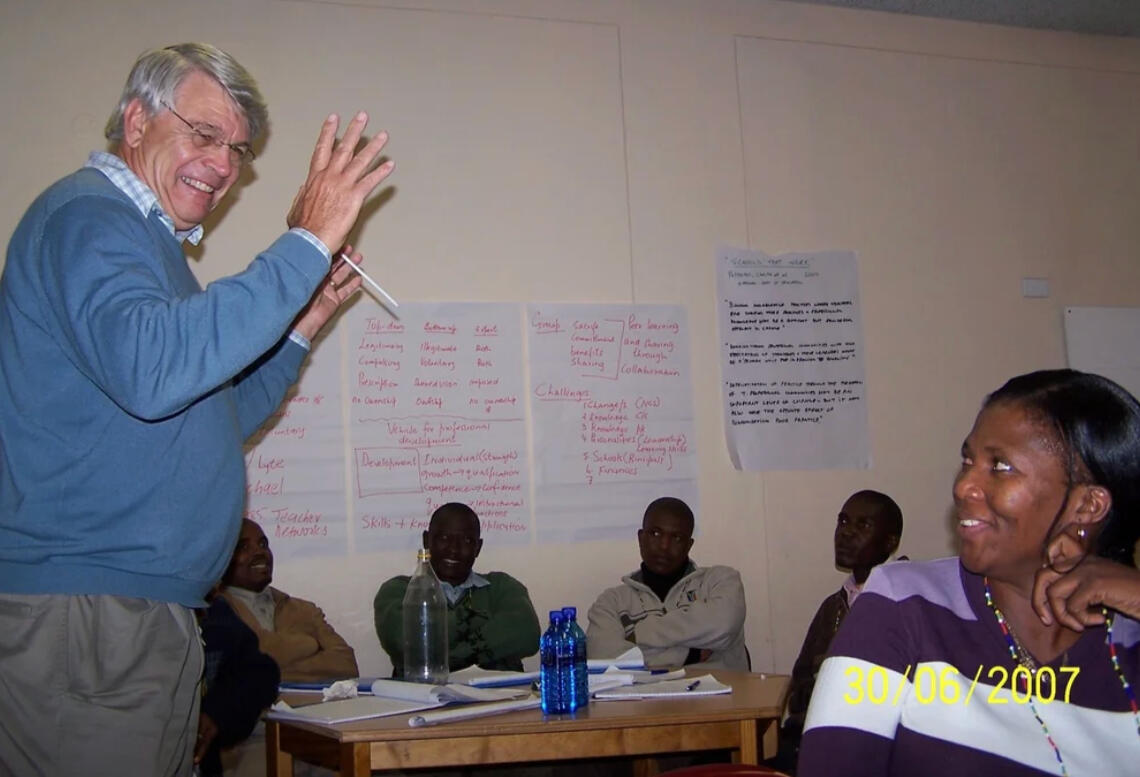
In his own words:“The ideas in these videos are drawn from a long history in science education, mostly through work with science teachers at schools in very disadvantaged situations.I qualified as a Physical Science and Mathematics teacher in 1966 and taught in high schools in South Africa and the UK for five and half years before moving to the tertiary sector.I was involved with friends in setting up the Science Education Project (SEP) in 1980, an NGO that worked with teachers in South African "township" and rural schools to promote a more hands on and science processes approach to teaching.I have also been involved in science teacher education as a senior lecturer at a number of universities in South Africa. With support from the Solon Foundation, I have worked intensively since 1998 in support of science teachers in deep rural areas in South Africa, Zimbabwe and Lesotho.”
To those of us who loved him so much it seemed unbelievable when he died in January 2014.Despite daunting health challenges in the preceding months, he succeeded in making 12 films, energised by his positive attitude and enthusiasm. He had plans for more and also for supplementing the videos with written materials.He hoped that these materials would enable teacher groups to run workshops so that teachers could become proficient in the experiments and demonstrations and could then engage their students in ‘active science learning’.The extra materials on site supporting the videos have been compiled by Peter Moodie, sponsored by the Solon Foundation. More materials will be added as they become available.We have also included additional documents from Brian’s files that relate to the video topics or other science topics, ideas for Science Expos and Fairs, and ideas for designing and managing labs.In the 1980s Brian had the vision of encouraging science teachers in isolated rural areas to set up teacher networks. For the next 30 years he worked with teachers in rural southern Africa to put this vision into practice.For more information and resources on setting up successful teacher networks, see the ‘setting up a teacher group’ section.We would love to hear about how these materials may have helped you - please email us with any feedback